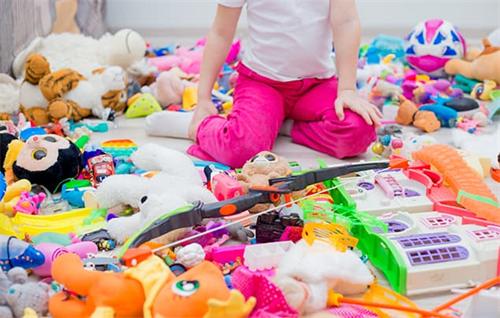



Are Siblings Competing for Toys — or for Worth?

——The Invisible Competition at Home
By Julianne Foster | Updated on March 12, 2026 | 🕓12–15 minutes
Key Highlights
- Are children really fighting over toys—or are they protecting their sense of worth?
- When did family life begin to feel like a performance system rather than a safe space?
- How does parental comparison silently reshape sibling relationships?
- Why does attention feel scarce—even in materially comfortable families?
- What happens when love becomes linked to achievement?
- Can shifting from “allocation” to “presence” reduce sibling rivalry?
In modern society—especially among urban middle- and upper-middle-class families around the world—childhood is increasingly managed as a carefully designed “project.” Academic rankings, competition awards, standardized test scores, graded music exams, athletic achievements—these measurable indicators form a powerful performance evaluation system. The competitive pressure parents experience in the workplace does not dissolve when they walk through the front door. Instead, it is transmitted into the home, transforming into high expectations, structured schedules, and meticulous oversight of children’s development. Parents become, often unintentionally, the conduits through which social performance logic enters family life.
When the implicit mandate becomes “every child must excel,” what turns scarce is not necessarily money, but psychological resources: parental emotional stability, unconditional acceptance, and high-quality attention. Material resources can be replicated or redistributed. Psychological resources, under sustained stress, are fragile. They cannot be divided cleanly or multiplied at will.
Gradually, the operating logic of the family shifts. It ceases to function purely as an emotional community and begins to resemble a multi-project management system. In this structure, inputs and outputs become measurable:
- The older brother’s piano lesson costs $100 per hour; the younger sister’s art class costs $50—investment is quantified.
- The brother passes Level 8 in music; the sister is still at a beginner stage—output is compared.
Once love and attention become intertwined with quantifiable indicators, children are no longer simply children. They become projects to be optimized. The family relationship, once rooted in shared identity and emotional belonging, begins to resemble a limited liability corporation in which resources must be allocated fairly and returns must justify investment.
From Fighting Over Toys to Defending Self-Worth
Within such a structure, sibling conflict changes in nature.
On the surface, children fight over toys, time, and parental attention. Beneath the surface, they are competing over project valuation. The core driving force is the fear of comparison.
In performance-oriented households, recognition is no longer experienced as unconditional warmth. It becomes conditional upon achievement. Children quickly sense that parental patience, tone, and engagement fluctuate according to measurable performance.
Thus, each conflict may function as a defense of self-worth:
- “Your Lego is too loud!”
The subtext may be: Why are you allowed to play while I must practice? Your relaxation diminishes the value of my effort.
- “Mom, he hit me!”
The hidden plea: Please notice me. Even negative attention is better than being invisible.
- “Your drawing is ugly.”
Beneath it lies: I cannot compete with you in math, so I will invalidate you in art to protect my fragile self-esteem.
When a parent says, “Why can’t you be more like your brother?” the statement implicitly assigns a higher valuation to one child and a corrective mandate to another. The family dynamic shifts into a zero-sum competitive structure: one child’s rise seems to imply the other’s decline.
Conflict stops being incidental. It becomes structural.

A Family System Is Not a Balance Scale
Family systems theory reminds us that a family is an emotional network, not a resource allocation mechanism. Each member occupies a unique ecological niche within the system. These roles are complementary rather than hierarchical.
In healthier systems:
- One child may assume responsibility.
- Another may bring vitality and humor.
- A third may act as mediator.
These are functional distinctions, not rankings.
However, when performance language dominates family interactions—when praise and comparison are distributed unevenly—the system destabilizes. The praised child may internalize pressure to remain exemplary. The compared child may gradually internalize the “problem role.” Over time, roles solidify: one forever excellent, one perpetually rebellious.
Once parents begin evaluating children through a fairness-and-distribution lens, they inadvertently transform siblings from complementary participants in a system into weights placed on opposite ends of a scale.
Global Manifestations of Performance Logic
This phenomenon is not confined to one culture. It reflects a global structural trend among competitive middle-class families.
The United States: Time Conflicts and Priority Investment
In many American middle-class households, extracurricular activities are no longer simple hobbies. They form part of a strategic development portfolio. As described in Playing to Win, competitive activities often begin in early childhood and are sustained with significant parental coordination.
In families with multiple children, logistical questions emerge:
Who gets priority for transportation?
Whose activity has higher “return on investment”?
Whose interests align more closely with elite college admissions pathways?
Time allocation becomes a proxy for future valuation. Behind scheduling conflicts lies an implicit calculation: whose future is worth prioritizing?
Europe: Emotional Attention as a Scarce Resource
In dual-income households common in countries such as Switzerland and Germany, material comfort may be sufficient, yet parental emotional bandwidth is limited. After long workdays, the evening window before bedtime becomes the family’s most precious resource.
When parental energy is depleted, whose emotions are addressed first? Whose distress receives patient listening? Whose achievements are celebrated with enthusiasm?
When emotional support is scheduled and divided, children may not experience love as an atmosphere. They experience it as something that rotates—something that might not be theirs tonight.
Educational Investment and Efficiency Logic
In families where educational resources cannot be expanded infinitely, parents may adopt an efficiency-maximization approach—directing more resources toward the child perceived as having higher potential.
This pattern appears not only in economically constrained households but also among anxious middle-class families globally. The consequences are complex:
- The “high-potential” child bears escalating performance pressure.
- The “lower-potential” child risks internal marginalization.
Even when material needs are met, losing one’s perceived status as “worthy of investment” can inflict deep psychological wounds.
Psychological Consequences: Fear of Comparison and Existential Anxiety
Children raised within persistent performance structures often develop enduring emotional patterns.
They crave emotional stability from parents whose own anxiety is externally driven.
They long to be seen as whole persons, not performance metrics.
They desire spaces free from comparison.
When mistakes are treated as project failures, recorded and recalled during future comparisons, children may become risk-averse. They learn to equate vulnerability with devaluation. Fear of failure morphs into fear of diminished worth.
Scarcity Is Often a Frame, Not a Fact
In Scarcity, researchers describe how perceived scarcity narrows cognitive bandwidth. When individuals believe resources are limited, attention fixates on allocation. Ironically, this mindset intensifies the feeling of insufficiency.
Consider a parent thinking:
“I only have one hour tonight—who should I spend it with?”
In that moment, attention transforms from a fluid relational presence into a divisible commodity. Children sense this framing. They begin to internalize it:
“If Mom looks at him, that means she’s not looking at me.”
Love, once abundant, becomes psychologically scarce.
Scarcity mindset spreads. Parents anxious about time transmit that anxiety. Children mirror it. The family collectively perceives shortage—even when objective resources have not dramatically changed.
Social Comparison and the Family as a Sanctuary
According to social comparison theory proposed by Leon Festinger, humans naturally evaluate themselves by comparing with others. Comparison itself is neutral. But within intimate relationships, especially between siblings, it can become corrosive.
When comparison is normalized in family language, children internalize it:
- Test scores are not self-referenced; they are sibling-referenced.
- Praise triggers anxiety about how it affects another child.
- Success becomes meaningful only in relation to someone else’s ranking.
Over time, identity formation shifts. Instead of asking, “Who am I?” children learn to ask, “Am I better or worse than someone close to me?”
The family, which ideally should function as a refuge from competitive hierarchies, becomes their origin.
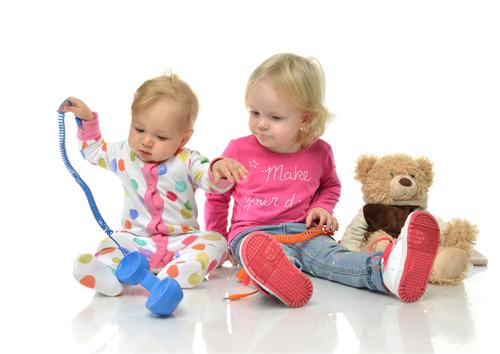
Reframing the Solution: Beyond Allocation Logic
The solution to sibling conflict does not lie in more precise distribution algorithms. It lies in dismantling the allocation frame itself.
When a family reclaims its identity as an emotional community rather than a performance enterprise, the meaning of resources changes. Love ceases to resemble a cake that must be sliced evenly. It becomes an expanding relational field.
Conflict diminishes not because resources are perfectly equalized, but because children no longer feel compelled to defend their worth through competition.
The true scarcity, then, is not material or even temporal. It is conceptual. It lies in the way we interpret and frame resources.
When parents shift from thinking in terms of division to thinking in terms of presence, from optimization to relationship, siblings can move from rivalry to coexistence. Children can return to a simpler existential ground: their value does not fluctuate with performance metrics. It does not depend on outperforming a brother or sister.
In such an environment, comparison loosens its grip. Scarcity softens. The family ceases to function as a limited liability corporation and becomes, once again, a shared emotional ecosystem.
Sibling conflict may never disappear entirely—after all, friction is part of human development. But when the family stops operating as a resource allocation system and resumes its role as a relational community, conflict transforms. It becomes negotiation, learning, and growth—not a battlefield over self-worth.
Ultimately, the deepest remedy is not better management. It is a fundamental shift in perspective: from distributing limited assets to cultivating relational abundance.
FAQs
1. Is sibling rivalry always harmful?
Not necessarily. A certain level of conflict is a natural part of development. It helps children learn negotiation, boundaries, and emotional regulation. The problem arises when rivalry becomes tied to self-worth and long-term identity.
2. How can parents tell if competition has become unhealthy?
Warning signs include frequent comparison-based language (“Why can’t you be like…”), children showing anxiety around others’ success, or conflicts that escalate quickly and feel emotionally intense rather than situational.
3. Should parents treat all children exactly the same to avoid conflict?
Equal treatment is not always the same as fair or effective. Children have different needs and personalities. What matters more is that each child feels seen, valued, and secure—not that every resource is distributed identically.
4. How can parents reduce the feeling of “emotional scarcity”?
By shifting from time-counting to quality of presence. Even short interactions can feel abundant if they are undivided, attentive, and emotionally available.
5. What should parents say instead of making comparisons?
Focus on individual growth and effort:
“I noticed how much time you spent on this.”
“You handled that situation thoughtfully.”
This reinforces self-referenced progress instead of sibling-based ranking.
6. Can high-achieving families avoid this dynamic?
Yes—but it requires awareness. Achievement itself isn’t the issue; it’s when achievement becomes the condition for love, attention, or identity.
7. What if one child clearly excels more than the other?
Differences in ability are natural. The key is to avoid turning those differences into hierarchy. Each child needs recognition in their own domain without it diminishing the other.
8. How can siblings move from competition to cooperation?
By experiencing the family as a shared system rather than a ranking structure. When children feel secure in their place, they are more likely to collaborate, support each other, and even take pride in each other’s strengths.
References
1. Friedman, H. L. (2013). Playing to win: Raising children in a competitive culture. University of California Press.
2. Mullainathan, S., & Shafir, E. (2013). Scarcity: Why having too little means so much. Times Books.
3. Suitor, J. J., Gilligan, M., & Pillemer, K. (2015). Within-family differences in parent–child relations across the life course. Current Directions in Psychological Science, 24(6), 469–473.
4. Whiteman, S. D., McHale, S. M., & Soli, A. (2011). Theoretical perspectives on sibling relationships. Journal of Family Theory & Review, 3(2), 124–139.
About the Author
Dr. Julianne Foster
Dr. Julianne Foster is a family systems researcher and clinical psychologist specializing in sibling dynamics, parental comparison patterns, and performance-based identity formation. He has worked with multi-child families across diverse socioeconomic contexts and has published essays on achievement culture and psychological scarcity. His research integrates family systems theory, social comparison theory, and behavioral economics to examine how modern performance pressures reshape intimate relationships within the home.
Editorial Transparency Statement
This article is an independent analytical essay. It is not sponsored, commissioned, or influenced by any organization, publisher, or commercial entity. All referenced materials are publicly available academic or scholarly sources. Interpretations presented here reflect the author’s integrative synthesis of family systems theory, social comparison research, and contemporary parenting culture analysis.
Professional & Educational Disclaimer
This article is intended for educational and informational purposes only. It does not constitute psychological, medical, or therapeutic advice. Readers experiencing acute family conflict, mental health distress, or relational crises should consult licensed mental health professionals or qualified family therapists for individualized support.
The perspectives offered here aim to broaden conceptual understanding rather than replace professional diagnosis or treatment.
Recommended for you: