



When Children Become the Emotional Regulators of the Family

——Why participation without boundaries can turn children into emotional managers instead of children.
By Lillian Moore | Updated on March 25, 2026 | 🕓10–12 minutes
Key Highlights
- Why do some children feel responsible for managing their parents’ emotions?
- How can you tell the difference between true maturity and stress-driven “pseudo-maturity” in children?
- Is involving children in family decisions always a good thing—or can it create hidden pressure?
- How does “pseudo-democracy” shift adult responsibilities onto children?
- What subtle behavioral signs reveal that a child is carrying emotional burdens?
- What is the “decision pyramid,” and how can it help clarify roles in the family?
- What does a truly safe and supportive emotional environment look like for a child?
The phenomenon of children taking on emotional roles in the family is not a random occurrence. It is a form of “functional misalignment” that the family system employs to maintain surface-level stability. When parents are emotionally underdeveloped, embroiled in marital conflict, or overwhelmed by life stressors, the family system instinctively searches for a “stand-in” to keep things running. Often, this stand-in is the child—especially those who are naturally sensitive and highly empathic.
A Sunday evening dinner illustrates this vividly.
The table is unusually quiet.
The parents’ conversation halts after the line, “Let’s review the budget again,” and does not continue.
Nine-year-old Lena suddenly begins sharing a funny story from school. Her pace is quicker than usual, and her laughter exaggerated.
No one notices that before telling the joke, she glanced at her father, then at her mother.
She knows that if the dinner remains silent, it may end prematurely.
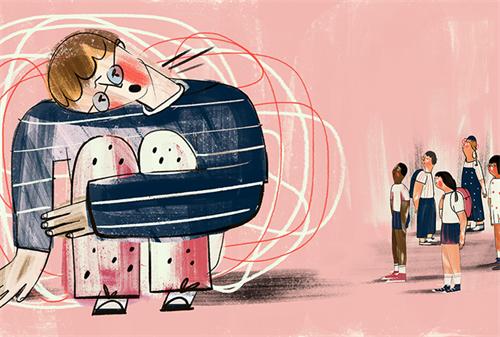
At first, these are just fleeting moments. Over time, Lena gradually assumes the role of emotional regulator within the family—not out of playfulness or curiosity, but quietly maintaining her parents’ emotional equilibrium.
Why Children?
Children’s love for their parents is absolute and unconditional. Their survival instinct drives them to do whatever it takes to stabilize the primary caregivers’ emotions and prevent the family from “falling apart.”
The catalyst is “participation without boundaries.” Families lacking clear intergenerational boundaries—i.e., “parents are parents, children are children”—blur these essential roles. Parents may vent adult frustrations to children, argue in front of them while seeking validation, or attribute their emotional swings to the child. These behaviors signal to the child that their parents’ emotions are somehow their responsibility.
As a result, children are subtly placed into the role of emotional stabilizer and family coordinator. Their primary task shifts from self-development to system maintenance.

The Transformation of the Child’s Role: From “Child” to “System Maintainer”
“Being mature” vs. “Premature understanding”:
- Genuine maturity: Empathy and sense of rules that develop naturally in a safe, loving environment.
- Pseudo-maturity (premature understanding): Skills forced by anxiety and stress to “read the air.” Children do not truly understand emotions—they interpret danger signals. A father’s silence or a mother’s sigh is not just observation; it is a cue for survival. This maturity is highly contextualized and stress-driven.
Children maintaining the system: At this stage, children often occupy specific psychological roles within the family:
- Emotion-regulating children (family stabilizers): They act as emotional sponges, absorbing negative energy and attempting to restore calm.
- Highly empathic children: Their empathy is overdeveloped and exploited to detect and soothe parental emotions rather than cultivate healthy interpersonal relationships.
- Role-playing children: Acting as “little spouses,” “little therapists,” or “mini-parents.”
- Invisible emotional laborers: Carrying out extensive emotional work that is unseen, unacknowledged, and unrewarded.
Children lose connection with their authentic selves. They do not know their true preferences, emotions, or needs, because these have been overwritten by the system’s expectation of “what I should be to keep the family stable.”
“Pseudo-democracy” and Responsibility Shifting
Many families emphasize open communication and equal discussion, encouraging children to “participate in family decisions.” On the surface, this appears to respect the child and promote democratic parenting. However, when children are prematurely given adult functions, problems emerge.
Over-transparency and pseudo-participation are often mistaken for respect.
The boundary between healthy democracy and responsibility shifting:
- Healthy democracy: Children are given choices within safe limits (e.g., what clothes to wear, weekend activities) and are taught to be responsible for their own decisions.
- Responsibility shifting: Children are involved in decisions that should be fully managed by adults, such as divorce, purchasing property, or other major financial or life choices. This is not respect; it is the parent’s way of outsourcing stress and guilt.
Many parenting philosophies—“child-led families” or “democratic parenting”—encourage children’s participation in major decisions. Yet, in some households, this participation exceeds the child’s cognitive and emotional capacity.
A child’s brain is not yet developed to process complex consequences. This can result in lifelong decision-related anxiety. Children may internalize the family’s happiness as dependent on their own past “votes,” creating lasting guilt and misattribution. They appear to be “partners” in family decisions but have only the obligations of partnership, not the power or security.
In this context, children are not learning decision-making skills; they are absorbing the emotional consequences of adult decisions. Parents may believe they are fostering respect and protection, but in reality, they are imposing adult responsibilities onto children.
True protection provides a stable, predictable environment. True respect recognizes the child’s right to grow without undue burden.
Invisible Costs: Behavioral Signals from Children
The costs of this role misalignment are subtle because children rarely complain directly. They express distress through behavior:
1. Early decision fatigue: Children become hesitant or indecisive, even in minor daily choices.
2. Responsibility for family happiness: Children attempt to balance parents’ emotions, redirect conversations, or sacrifice their own interests.
3. Blurred authority boundaries: Children function as “emotional advisors” or “equal members” without actual authority. They learn to predict and manage adult emotions but do not gain true autonomy.
Rebuilding Healthy Boundaries and Participation
Define the “decision pyramid”:
- Apex (Adult Responsibility Zone): Relationships, finances, careers, major life changes. Parents resolve these privately and communicate outcomes to children.
- Middle (Family Co-construction Zone): Vacation destinations, weekend activities, family rules. Children can voice opinions, and parents make final decisions with explanations.
- Base (Child Autonomy Zone): Personal hobbies, friends, extracurricular activities. Children decide within safe limits and face natural consequences.
Parental responsibilities:
- Emotional self-management: Tell children, “Mom is upset right now, but it’s not your fault. I need to handle it myself.”
- Rebuild adult support systems: Seek emotional support from partners, friends, or professionals—not from the child.
- “Fire” the child from mediator role: During conflicts, make it clear, “This is a problem for Mom and Dad to solve. Thank you for caring, but it’s not your job.”
- Celebrate childhood: Allow mistakes, tantrums, and unreasonable requests. Let children experience unconditional acceptance.
Children who are most adept at maintaining family harmony often pay the highest price in their personal growth. Breaking this cycle begins when parents recognize the hidden burden behind “being good” and courageously return that weight to themselves.
Back at the dinner table:
Another Sunday dinner unfolds. Parents discuss next week’s plans in a relaxed atmosphere. Lena quietly eats her pizza, no longer intervening. She is simply a child. Her parents resolve disputes themselves, and she observes from within safe boundaries.
This subtle difference can shape the quality of childhood:
Being “good” is not maturity—it is premature responsibility. Participation is not burden—it is experience. Only with clear boundaries can family democracy truly benefit children, rather than turn them into emotional managers.
FAQs
1. Can a child being “emotionally sensitive” still be healthy?
Yes. Emotional sensitivity itself is not a problem—it can be a strength. The key difference is whether the child feels safe expressing their own emotions, or feels responsible for managing others’. Healthy sensitivity grows in a supportive environment, not under pressure.
2. At what age can children start participating in family decisions?
Children can begin participating in small, low-stakes decisions as early as preschool age. However, involvement should always match their developmental stage. The younger the child, the more limited and structured their choices should be.
3. Is it harmful to argue in front of children?
Not necessarily. What matters is how conflicts are handled. Calm, respectful disagreements followed by resolution can model healthy communication. Ongoing tension, emotional outbursts, or unresolved conflict can make children feel unsafe or responsible.
4. How can I tell if my child is taking on too much emotional responsibility?
Look for patterns such as:
- Frequently trying to “fix” adult moods
- Avoiding expressing their own needs
- Excessive worry about family harmony
- Acting overly mature or “too understanding” for their age
5. What should I do if my child tries to comfort me when I’m upset?
Acknowledge their care, but gently return the responsibility:
“Thank you for caring about me. I’m okay, and this is something I will handle.”
This reassures the child while reinforcing boundaries.
6. Can involving children in big decisions (like moving or divorce) ever be helpful?
Children can be informed and allowed to express feelings, but they should not carry decision-making responsibility. Their role is to adapt and be supported—not to choose outcomes that affect the entire family.
7. Will correcting this pattern later still help, or is it too late?
It’s never too late. Even older children and teenagers can benefit when parents reset boundaries and take back emotional responsibility. The earlier it’s addressed, the easier the transition—but change at any stage is meaningful.
8. How can parents model healthy emotional boundaries?
- Express emotions without blaming the child
- Take ownership of stress and reactions
- Seek support from other adults
- Clearly separate “adult problems” from the child’s world
References
1. Bowen, M. (1978). Family therapy in clinical practice. New York, NY: Jason Aronson.
2. Minuchin, S. (1974). Families and family therapy. Cambridge, MA: Harvard University Press.
3. Hughes, D. A. (2011). Attachment-focused parenting: Effective strategies to care for children. New York, NY: Norton.
4. Siegel, D. J., & Hartzell, M. (2003). Parenting from the inside out: How a deeper self-understanding can help you raise children who thrive. New York, NY: TarcherPerigee.
5. Van der Kolk, B. (2014). The body keeps the score: Brain, mind, and body in the healing of trauma. New York, NY: Penguin Books.
About the Author
Lillian Moore
Qualifications: M.A. in Developmental Psychology, Certified Family Therapist
Experience: Over 10 years of research and clinical practice in child and family development, specializing in emotional resilience and family systems dynamics.
Editorial Transparency Statement
This article is written to provide educational insights into child development and family dynamics. The content is based on peer-reviewed research, established psychological theory, and professional clinical experience.
Professional & Educational Disclaimer
This article is for educational and informational purposes only. It does not constitute medical, psychological, or legal advice. Readers should seek professional guidance for specific concerns related to child development or family mental health.