


Why Kids’ Products Now Feel Like Fast Fashion
——How Developmental Marketing Turned Childhood Into a Series of Purchases
By Natalie Whitaker | Updated on March 8, 2026 | 🕓15–18 minutes
Key Highlights
- Are the latest kids’ products really necessary?
- Why do parents feel compelled to replace functional items?
- How can families reduce consumption pressure without compromising safety or fun?
- What long-term impact do rapid replacements have on children?
- Are there practical alternatives to the fast-fashion cycle of children’s products?
Children’s products are being updated and replaced at an unprecedented speed. Behind this trend lies a sophisticated commercial logic that slices childhood into finely segmented, price-tagged stages. Families are no longer buying items meant to accompany children for years; instead, they are purchasing tools designed to serve a single developmental phase.
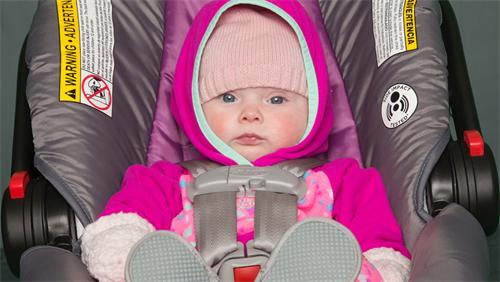
Infant car seats are divided into newborn carriers, adjustable infant seats, and toddler booster seats. Toys are labeled “best for 6–8 months” or “ideal for 9–12 months.” Feeding tools evolve from soft-tip spoons to angled training spoons to full “independent eating kits,” each suggesting another upgrade every few months.
What makes these changes particularly compelling is their apparent scientific legitimacy. Brands align product cycles with developmental theory, giving short product lifespans the appearance of evidence-based necessity. Continuous growth is divided into precise stages, each paired with a new purchasing decision. Childhood gradually becomes a sequence of consumption milestones.
In China’s children’s footwear market in 2025, categories such as “first-step shoes,” “functional shoes,” “stability shoes,” and “advanced walking shoes” proliferated, with prices ranging from a few dollars to premium levels. Yet orthopedic specialists from the Children’s Hospital affiliated with Zhejiang University School of Medicine have noted that there is currently no evidence proving that specialized walking shoes help children learn to walk faster.
This stage-based consumption is not limited to one country. In many European middle-class homes, corners of living rooms are filled with children’s scooters that are “no longer suitable”: a balance bike from the early phase, a transitional three-wheel scooter, and a miniature adult model for the “real riding stage.” Emily, a mother sorting through these items, remarked calmly, “They still work perfectly—but somehow they don’t feel right anymore.” No one sees themselves as wasteful, yet the pace of replacement has clearly accelerated.
Upgrade Anxiety: How Safety Narratives Drive Consumption
Safety and health concerns have become the strongest drivers behind frequent upgrades.
A London mother once asked on a parenting forum whether she should continue using an older sibling’s car seat. The replies were overwhelmingly cautious: “I wouldn’t risk it,” “New models have side-impact protection,” “Old materials might have degraded.” In commercial messaging, phrases like “safer design,” “healthier materials,” and “reduced risk” appear again and again.
In reality, many upgrades represent incremental improvements rather than fundamental changes. A technical expert from a children’s product testing platform has pointed out that much of the so-called “technology” is largely marketing language. Yet parents are placed in an emotional dilemma: rationally, they know many claims may be exaggerated; emotionally, they cannot bear the possibility of something going wrong. Safety becomes the most powerful emotional trigger for purchase decisions.
Aesthetic Turnover: When Social Media Shortens Product Lifespans
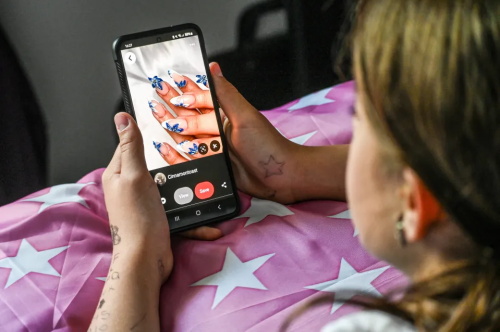
Search for “kids’ room design” on Pinterest or Instagram, and you’ll find a stream of idealized environments: Montessori play spaces, Scandinavian minimalist bedrooms, color-psychology-inspired play areas. Parenting influencers showcase seasonal redesigns; family vloggers regularly update their children’s living spaces to match holidays, birthdays, and new developmental phases.
These platforms do more than provide inspiration—they establish visual standards for what an “ideal childhood” should look like. As trends change rapidly, furniture and toys that remain functional begin to feel outdated purely for aesthetic reasons.
The warmth of mixed old and new objects gives way to perfectly coordinated interiors designed for photography. Educational philosophies such as Montessori and Waldorf become simplified product labels. Childhood spaces shift from stable environments for growth into constantly updated visual stages.
Family Rhythm: When Parents Become Ongoing Procurement Managers
Short product lifecycles reshape how families spend their time. Every few months, parents find themselves sorting, reselling, replacing, and researching.
Time once spent on shared activities becomes fragmented into reading reviews, comparing products, following influencer recommendations, and managing second-hand sales. One father joked, “I’ve probably spent more time choosing sunscreen brands than actually playing in the sun with my kid.”
Physical spaces within the home begin to resemble storage hubs in transition—boxes for resale in one corner, hand-me-downs waiting in another, lists of upcoming upgrades saved in phone notes. Managing the flow of objects in and out becomes an invisible but significant part of modern parenting labor.
Childhood Perception: When Growth Becomes an Equipment Upgrade
As rapid replacement becomes normal, children’s understanding of objects and growth begins to change. Items are no longer long-term companions but temporary tools for specific tasks.
Children grow accustomed to frequent upgrades and may quickly lose interest in toys, anticipating the next “better” version. Development begins to resemble a video game—new levels require new equipment. Opportunities to learn care, maintenance, and emotional attachment through long-term use gradually diminish.
Family memories become more fragmented as well. In the past, a single desk might accompany a child through many school years, or a backpack might hold years of shared experiences. Today, frequent replacements mean fewer objects carry long-term emotional significance.
The Commercial Logic Behind Stage-Based Consumption
At a macro level, subscription-based children’s brands are expanding rapidly. U.S. early learning company Lovevery uses stage-based subscription boxes to transform development into ongoing purchasing cycles. UK-based Yoto combines screen-free audio devices with monthly story card subscriptions, maintaining continuous engagement through new content.
At a mid-level, educational philosophies have been systematically commercialized. Montessori methods and STEM learning have shifted from teaching approaches into product labels, with “age-based development guides” turning continuous growth into discrete consumption checkpoints.
At a micro level, parental anxieties—about safety, development, social comparison, and time—are effectively converted into purchasing motivation. In an environment of information overload, buying the “latest” and “most suitable” product offers parents a sense of certainty and control.
Consumer Pushback: Rebuilding Long-Term Relationships With Objects
In response to the fast-fashionization of children’s products, some European families are experimenting with slower consumption practices. Their goal is not merely saving money but rebuilding continuity between objects and childhood.
In Copenhagen, families increasingly choose adjustable furniture that grows with the child. In the Netherlands, parents repair toys rather than replace them, turning maintenance into a learning experience. In the UK, Marks & Spencer introduced a one-year quality guarantee on children’s clothing and promotes reuse, repair, resale, and recycling.
One single mother in London shares her intentionally mixed children’s room on social media—a vintage rocking chair from a grandparent, second-hand finds, and a few carefully chosen new items. Instead of creating a “perfect” themed space all at once, she allows the room to evolve gradually, with each object carrying a story.
These practices resist stage-based consumption by extending product lifespans and restoring continuity to children’s experiences. Children raised in such environments may be less likely to say, “I’ve grown up—I need something new,” and more likely to say, “This has been with me for a long time—I want to keep using it.”
The Chair That Was Never Replaced
At seven in the evening, the kitchen lights flick on. A child sits on a wooden dining chair that is clearly a little too small now. Crayon lines from years ago still mark the backrest, faded by repeated cleaning. A small crack along the armrest—left from an early fall while learning to walk—has been carefully wrapped with transparent tape.
The chair does not meet any modern stage recommendations. It has no interchangeable modules, no updated safety labels. According to product guidelines, its “appropriate age range” ended long ago.
Across the living room sit several items prepared for resale: an upgraded stroller, an almost-new walker, an outdoor seat used for only one summer. Each was carefully researched and thoughtfully purchased, then quickly replaced as one phase ended and another began.
The father gently pushes the chair closer to the table and smiles. “We probably should have replaced it a long time ago,” he says. After a pause, he adds, “But it’s the only thing that never got phased out.”
The child eats quietly, fingers tracing the old scratches on the chair’s backrest—touching a familiar piece of time.
In a world where children’s products increasingly resemble fast fashion, what families lose may not only be money, but also the objects that quietly accompany growth, age slowly alongside childhood, and eventually become part of memory itself.
Parent Takeaways: Practical Strategies for Modern Families
1. Inspect Before Replacing: Check wear, recall history, and structural integrity. Safety doesn’t always require upgrading.
2. Prioritize Durability: Invest in adjustable, long-lasting items to reduce waste and repeated purchases.
3. Limit Trend Pressure: Reduce social media exposure; focus on functionality and child interest rather than aesthetic trends.
4. Involve Children in Decisions: Let them choose what to keep, repair, or gift. This teaches responsibility and decision-making.
5. Teach Attachment and Care: Encourage maintenance and respect for long-term possessions, fostering emotional connection.
6. Schedule Gear Reviews: Set quarterly check-ins to manage clutter and plan purchases thoughtfully.
7. Balance Safety and Functionality: Focus on verified safety data rather than marketing claims. Incremental upgrades are rarely urgent.
8. Emphasize Play Over Products: Prioritize experiences and interaction over constant acquisition of new gear.
FAQs
Q1: How do I know if a product really needs upgrading for safety reasons?
A: Check official recalls, manufacturer guidelines, and inspect wear or degradation. Incremental design changes don’t always require replacement.
Q2: What types of products are easiest to make last longer?
A: Adjustable furniture, modular toys, durable clothing, and items designed to grow with your child tend to last through multiple stages.
Q3: How can I teach my child to value and care for their belongings?
A: Involve them in cleaning, repair, and selection processes. Encourage them to reflect on which items are meaningful and why.
Q4: Is it okay to use hand-me-downs or second-hand items?
A: Absolutely. Hand-me-downs and second-hand products can be safe, sustainable, and emotionally valuable. Always check for recalls and wear before use.
Q5: How often should families review their children’s items?
A: A quarterly review (every 3 months) is a practical approach. Decide what to keep, gift, resell, or repair, and involve your child in the process.
References
1. American Psychological Association. (2023). Stress in America™ 2023: Parenting stress and family well-being. APA Publishing.
2. Dunn, E. W., & Norton, M. I. (2013). Happy money: The science of smarter spending. Simon & Schuster.
3. Faircloth, C. (2014). Intensive parenting and the expansion of parenting. In Parenting Culture Studies. Palgrave Macmillan.
4. Gentina, E., Shrum, L. J., & Lowrey, T. M. (2018). Teen attitudes toward luxury brands and consumer socialization. Journal of Business Research, 86, 338–346.
5. Twenge, J. M. (2023). Generations: The real differences between Gen Z, Millennials, Gen X, Boomers, and Silents. Atria Books.
6. Alshamrani, S., Abusnaina, A., Abuhamad, M., Nyang, D., & Mohaisen, D. (2021). Exposure of children to inappropriate comments on YouTube.
About the Author
Dr. Natalie Whitaker is a UK-trained educational researcher currently based in London. She is a doctoral candidate in Education and Society and works part-time as a family learning facilitator. Her research focuses on parenting culture, educational inequality, and the psychological impact of consumer-driven childhood environments. She has contributed essays and research commentary to independent European parenting media and educational platforms.
Editorial Transparency Statement
This article is an independent editorial analysis based on personal observations, professional training in education research, and publicly available academic literature.
No commercial brands, subscription services, or parenting products sponsored or influenced the creation of this content.
Any examples mentioned are used solely for cultural or analytical discussion and do not constitute endorsements or criticism of specific companies.
Professional & Educational Disclaimer
This article is intended for educational and reflective purposes only. It does not provide medical, psychological, or individualized parenting advice.
Readers should consult licensed healthcare professionals, child psychologists, or educational specialists for decisions regarding their child’s development, mental health, or medical care.
Family situations vary widely; interpretations should be adapted to individual cultural and social contexts.