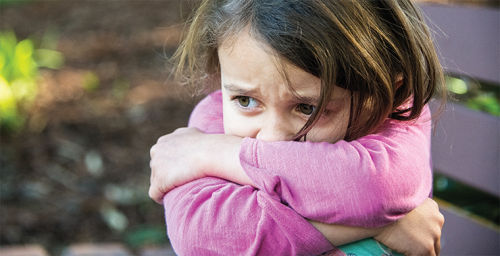



How Social Media Amplifies Parental Fear

——How Parents Can Maintain Judgment in an Age of Information Overload
Social media has fundamentally altered the reference system through which parents interpret reality.
By Isabel Thornton | Updated on April 1, 2026 | 🕓10 minutes
Key Highlights
- Are the risks I fear actually common—or just highly visible?
- Am I reacting to data, or to emotionally charged stories?
- How is my anxiety subtly shaping my child’s view of the world?
- When did safety conversations replace connection in our daily interactions?
- Do my parenting decisions come from calm judgment—or emotional peaks?
Layer One: How Social Media Reshapes Our Sense of Risk Proportion
In the past, risk was grounded in lived experience — a neighbor’s child falling off a bike, a seasonal flu outbreak at school, rumors in the community about a suspicious stranger. Because such events were rare and geographically bounded, they rarely restructured a family’s daily decision-making system. A mother in upstate New York would not ban her child from playing outside because of an alligator attack in Florida. Geographic distance and psychological distance together formed a buffer of safety.
Today, extreme cases are hyper-visible.
In September 2025, video footage of American activist Charlie Kirk being shot in the neck at a rally crossed oceans within minutes, appearing on the phones of children in Hyderabad, India. “It suddenly showed up on my son’s screen before I even had time to explain what had happened,” one local mother described. “He wasn’t searching for it. It just arrived through a friend’s group chat.”
Algorithms are naturally drawn to high-emotion content. Fear spreads faster than calm; outrage captures attention more effectively than nuance. As a result, isolated incidents begin to feel like statistical norms: stabbings in London, random attacks in Sydney shopping centers, the Tokyo subway gas attack — events once distant in geography are compressed into the same scrollable feed, becoming part of parents’ daily cognitive landscape.
This is not because parents are “too sensitive.” It is because their brains are being retrained in an environment saturated with high-density extreme cases. Psychologist Daniel Kahneman termed this phenomenon the availability heuristic — our tendency to judge the likelihood of events based on how easily examples come to mind. In a world that continually broadcasts worst-case scenarios, “rare” begins to feel like “common.”
Before the digital era, rare tragedies remained rare in our mental maps. A 2000 study found that when parents were asked about their fear of stranger abduction, their level of concern was grossly disproportionate to the actual probability — in the United States, among approximately 72 million children under 17, only about 300 cases per year involved abduction by strangers, roughly a 1 in 250,000 probability. Yet each case is repeatedly broadcast, reposted, and algorithmically amplified. Statistically uncommon events become emotionally frequent.
When parents repeatedly consume extreme cases, their brains operate exactly as designed: updating internal risk maps. The issue is not irrationality. It is exposure density.
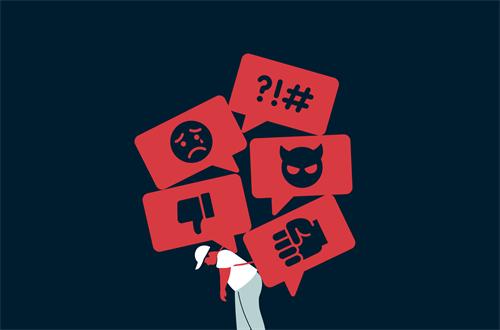
Layer Two: When Anxiety Becomes a Family Management System
What happens to a family when parents live in a prolonged state of alert?
1. From Relationship System to Risk-Control System
The tone of conversation quietly shifts. Exchanges once centered around “Did you have fun today?” or “What was interesting at school?” become dominated by prevention, avoidance, checking, monitoring. “Don’t talk to strangers.” “Let me see your phone.” “Is your location on?” “Who are this friend’s parents?” None of these questions are inherently wrong. But when they form the core of parent–child dialogue, the family’s function begins to shift.
Sociologist Ulrich Beck described modern Western societies as “risk societies” — cultures increasingly organized around predicting and managing future hazards. Philosopher Paul Smeyers further argued that risk thinking, combined with technological solutions, has redefined the parental role.
In such societies, prevention becomes a moral obligation. A “good parent” is no longer simply loving or attentive, but perpetually vigilant — scanning for invisible threats. What children absorb is a background message: the world is dangerous, and something could happen to you at any moment.
Social media did not create this condition, but it intensifies it. Platforms function as daily rehearsals of catastrophe, reinforcing the belief that safety depends on continuous vigilance. A study conducted in Indonesia found that parenting-focused social media accounts systematically generate anxiety by promoting “ideal parenting standards,” operating as disciplinary mechanisms that leverage modern uncertainty to produce fear.
2. How Worst-Case Thinking Alters a Child’s Risk Map
Children do not primarily internalize what parents say. They absorb how parents see the world.
When parents discuss the latest abduction at the dinner table, when their brows tighten at push notifications about child accidents, when every outing is preceded by extended safety briefings — these moments transmit a subtle message: the world is full of danger, and you may not be able to handle it.
Sustained worst-case narratives can produce three cognitive shifts in children: overestimating environmental threats (“Going outside is dangerous”), underestimating personal competence (“I can’t handle unexpected situations”), and developing avoidance strategies (“I’d rather just stay home”).
This is not merely emotional contagion. It is intergenerational transmission of risk models. Psychologist Richard Bell argued as early as 1968 that socialization is bidirectional — children shape parental behavior as well. When an anxious child becomes withdrawn or dependent, it reinforces the parent’s belief: “See? I need to protect even more.” Once formed, this interaction pattern can solidify into the family’s norm.
3. When Control Replaces Trust
In high-information environments, parents often assume: if I know enough, I can prevent disaster. But information is not control.
When parents continually search for additional preventive measures — the safest baby monitor, the school with the lowest crime statistics, the app that most comprehensively tracks a child’s digital footprint — they may be soothing their own anxiety rather than increasing actual safety. Psychologist Barry Schwartz argued in The Paradox of Choice that more options do not necessarily produce more freedom; they often produce more anxiety and self-doubt.
Digital-age parenting embodies this paradox. For every worry, there are dozens of strategies, expert opinions, and optimization plans. Yet information overload does not deliver peace of mind. Instead, it intensifies pressure: if something goes wrong, it must have been our fault for choosing incorrectly. Information multiplies responsibility. And when responsibility becomes limitless, it quietly transforms into fear.
One Indian mother recalled her childhood during the 2007 Mecca Masjid bombing in Hyderabad. “There was no internet then. Adults told us very little. That confusion lasted for years.” Now, as a parent, she faces the opposite problem — not too little information, but too much.
Polish researchers have also identified a troubling trend: some parents post videos of their children crying, frightened, or startled as part of so-called “parental trolling” challenges. These videos juxtapose a child’s distress with adult laughter and cheerful background music. Researchers warn that this is not only immediate online humiliation, but may normalize boundary violations for the next generation of parents. When fear itself becomes entertainment, distortions in risk perception deepen.
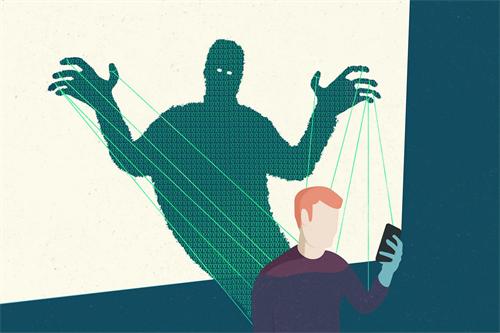
How Parents Can Maintain Judgment
1. Distinguish Emotion-Driven Information from Probability-Driven Information
When encountering an alarming parenting story, pause and ask: is this informing me about probability, or triggering fear?
Probability-based information offers context and data — “Child traffic accidents decreased by X% this year.” Emotion-driven information relies on extreme anecdotes, vivid language, and suggestions that “this could happen to any child.” Maltese educational psychologist Dr. Erika Galea advises teaching children to slow down and evaluate what is real and what is not. Parents must practice the same discipline.
One helpful exercise is tracking your “fear conversion rate.” Reflect on the threats you worried about most last year. How many actually entered your family’s lived experience? Likely very few, perhaps none. This recalibration can help reset your internal risk map.
2. Restore Everyday Samples
Algorithms feed you extreme samples. Reality offers everyday samples.
When anxiety rises, deliberately return to real-world observation. Watch how children in your neighborhood actually play. Observe most students outside a school gate. Speak with parents whose children are older and ask: how many of the things you feared actually happened?
Psychologists Arnold Sameroff and Michael Chandler, in their research on child resilience, identified what they called “self-righting influences” — stable love, responsive caregiving, and supportive environments — as far more predictive of healthy development than isolated risk factors. Most infants who experience birth asphyxia, for example, develop normally within nurturing environments. The finding itself is a reminder: stable, relationally rich daily life is the child’s true protective net.
Restoring parental judgment is not about gathering more information. It is about returning to proportional reality.
3. Build a Delayed-Decision Window
Many fear-based decisions occur at emotional peaks — deleting all social media after reading a frightening article, withdrawing a child from school after hearing about a campus incident, forbidding independent walking after a kidnapping story.
The advice is not “don’t worry.” It is: do not create long-term family rules at emotional peaks. Establish a delay window — 48 hours, or a week. Let the emotional spike subside. Allow reason to return. If, after that period, the change still feels necessary, proceed.
Maltese educators emphasize the importance of parental collaboration and mutual support in managing modern parenting pressures. A supportive network can serve as a stabilizing reference point during emotional turbulence.
If a society continually reminds parents of worst-case scenarios, are we quietly constructing a more fearful generation?
Children do not need exhaustive knowledge of every possible danger. They need to believe that when they face the unknown, someone steady will stand beside them.
FAQs
1. Is it wrong to feel more anxious as a parent in the digital age?
Not at all. Increased anxiety is a natural response to increased exposure. The issue is not the feeling itself, but whether it consistently drives decision-making without reflection.
2. Should I limit my own social media use to reduce parenting anxiety?
In many cases, yes. Even small adjustments—such as unfollowing high-anxiety accounts or setting time limits—can significantly reduce exposure to extreme, emotionally triggering content.
3. How can I tell if I’m overestimating a risk?
A simple check: look for base rates. If a risk is presented without statistics or context, it is likely designed to evoke emotion rather than inform judgment.
4. Is monitoring my child’s activities (location, phone, etc.) harmful?
Monitoring itself is not harmful, but over-reliance on control can weaken trust. The key is balance: use tools as support systems, not substitutes for communication and relationship-building.
5. Can children develop anxiety just by observing their parents?
Yes. Children are highly sensitive to emotional cues. Repeated exposure to parental worry can shape their perception of the world, even without explicit instruction.
6. What is the most important protective factor for children?
Consistent, stable relationships. Research repeatedly shows that responsive caregiving and emotional security outweigh isolated risks in shaping long-term outcomes.
References
1. Setiawan, R., & Putri, A. (2022). Parenting anxiety and digital media exposure: A qualitative study of Indonesian mothers. Journal of Family Studies, 28(4), 1123–1138.
2. Twenge, J. M. (2023). Generational changes in adolescent mental health in the digital age. Current Directions in Psychological Science, 32(1), 15–21.
About the Author
Dr. Isabel Thornton, PhD
Dr. Eleanor Whitman is a family systems researcher and writer focusing on risk perception, digital environments, and intergenerational anxiety transmission. She holds a PhD in Social and Developmental Psychology from the University of Edinburgh and has conducted interdisciplinary research on how digital media reshapes parental cognition and child development patterns.
Her work has appeared in academic and public-facing publications addressing family systems, cultural narratives of risk, and emotional regulation in modern societies. She writes at the intersection of psychology, sociology, and lived parental experience.
Editorial Transparency Statement
This article integrates peer-reviewed psychological and sociological research with contemporary observations of digital culture. All referenced academic works are publicly traceable and cited in APA format.
The case examples included are anonymized and presented for illustrative purposes. No identifying personal data has been used.
The author declares no financial conflicts of interest related to digital platforms, parenting products, or media organizations.
Professional & Educational Disclaimer
This article is intended for educational and informational purposes only. It does not constitute medical, psychological, or legal advice.
Readers experiencing significant anxiety, family distress, or concerns about child mental health are encouraged to consult licensed professionals in their local jurisdiction.
Decisions regarding child safety, schooling, or digital exposure should be made in consultation with qualified professionals and within the context of each family’s unique circumstances.