


Why So Many Parents Quietly Lose Friends After Having Children
——From Person to Family System: The Social Cost of Parenthood
By Eleanor Whitmore | Updated on January 20, 2026 | 🕓10–12 minutes
Key Highlights
- Why do friendships often fade after becoming a parent—even without conflict?
- How does the shift from “individual” to “family manager” reshape social life?
- Is it really about lack of time, or a deeper drain on emotional energy?
- Why does parenting create a unique kind of loneliness, even when life is full?
- Why do parents struggle to feel understood?
- How can parents rebuild connection without returning to their pre-child lifestyle?
When “I” becomes “we,” something far more profound happens than most people anticipate. The well-worn phrase, “You’ll understand when you have kids,” is often interpreted as a warning about sleepless nights and endless diaper changes. But its real meaning runs much deeper. Becoming a parent does not simply add a new title to your business card. It uproots you entirely and transplants you into a new social ecosystem.
In this new world, the most subtle and quietly painful transformation is often not the relationship with your partner, but the relationship with your friends. What occurs is not simple drifting apart. It is an invisible restructuring based on identity, emotional capital, and social function.
I. The Reordering of Identity: From Individual to Family Manager
Before becoming parents, we are primarily individuals. Our identities are shaped by our careers, interests, values, and social networks. But once a child arrives, a new and overwhelming identity emerges: the “family manager.”
This is not merely an additional role layered onto an existing self. It is a fundamental reshuffling of priorities. Developmental psychologist Daniel Levinson, in his theory of adult development, described life as a continual process of constructing and revising one’s “Life Structure.” Parenthood represents one of the most dramatic Life Structure Transitions. The central life task shifts from exploring the world and cultivating personal fulfillment to maintaining the functioning of a family system and ensuring the survival and development of the next generation.
This shift fundamentally alters the logic of social interaction.
Previously, friendships were based on resonance. You bonded with Friend A because you both loved independent films. Friend B became a confidant because you could talk philosophy late into the night, wrestling with existential questions and personal uncertainties. These relationships were built on shared interests and emotional alignment. They belonged entirely to “me.”
After children, friendships tend to reorganize around function. The parent of your child’s classmate becomes a key contact for school updates and homework reminders. The neighbor whose child is one year older becomes your informal parenting consultant and supplier of hand-me-down clothes.
This does not mean parents suddenly become calculating or utilitarian. Rather, the identity of “family manager” unconsciously restructures the social network. Your social radar operates 24 hours a day, scanning for information and support that might benefit the family system. This functionalization of social structure is not cynicism—it is an adaptive survival strategy.

II. Emotional Capital Reinvestment: Friendship “Decluttering” Is Not About Time
Many people attribute fading friendships to a lack of time. But sociologist Arlie Hochschild, in her landmark work The Second Shift, reveals a deeper explanation. The issue is not merely time scarcity—it is a total reorganization of emotional capital.
Hochschild introduced the concept of the “second shift”: after completing paid work, many parents return home to unpaid labor—household chores, caregiving, and, perhaps most invisibly, emotional labor. You soothe a crying child. You mediate sibling conflicts. You manage your partner’s stress. You plan next week’s logistics. You anticipate needs before they arise.
This constant emotional output quietly drains internal reserves.
In such a system, emotional capital is automatically prioritized toward what feels most essential to the survival of the household:
- Children (security and attachment)
- A partner (co-parenting collaboration)
- The family unit as a whole (its stability and continuity)
Friendships, however valued, often become long-term investment accounts temporarily placed on hold.
This is not a sign that parents stop caring about their friends. It reflects a shift from what we might call “venture investment”—exploring new possibilities and enjoying shared intellectual or emotional discovery—to “capital preservation”—ensuring the stability of the core system.
When a friend invites you out, the hesitation is rarely “I don’t want to go.” Instead, it is: If I go, who will cover my second shift? Do I have enough emotional energy left to sustain a lively conversation? Emotional scarcity, not indifference, often lies at the heart of social withdrawal.
III. Parental Loneliness: Not Lack of Company, But an Unremovable Role
Globally—particularly in the post-pandemic era—parental loneliness has emerged as a serious public health concern. In 2023, U.S. Surgeon General Vivek Murthy released the advisory report Our Epidemic of Loneliness and Isolation, equating the health risks of chronic loneliness to smoking fifteen cigarettes a day. Parents of young children are among the highest-risk groups.
Yet parental loneliness has a distinctive quality. It is not the loneliness of eating dinner alone or lacking weekend plans. It is the suffocating experience of inhabiting a role that cannot be removed.
According to developmental theorist Erik Erikson, midlife centers on the psychosocial conflict of Generativity vs. Stagnation. Parenthood is one of the most powerful expressions of generativity—investing in the next generation, creating continuity, building legacy.
But every developmental gain carries a shadow. Devotion to the next generation inevitably reduces available attention for peer relationships. This is a natural filtering process.
Still, generativity alone does not fully explain the loneliness parents report. A deeper issue lies in narrative compression.
Modern societies reward visible achievements: promotions, salary increases, travel experiences, creative projects completed. These are quantifiable, displayable successes. Parenthood, by contrast, consists largely of invisible labor: feeding, cleaning, soothing, scheduling, negotiating, waking up at night, repeating instructions for the hundredth time. The work is cyclical, intangible, and rarely culminates in a publicly recognizable milestone.
You cannot enthusiastically recount how you successfully convinced a toddler to sleep without protest. You cannot present “mediating a dispute over which cartoon to watch” as a triumph of negotiation strategy at a dinner party. When someone asks, “How have you been?” an entire world of effort sits behind your eyes. Yet it condenses into a polite: “Busy. Doing okay.”
Parental loneliness often arises not because friends disappear, but because there is no social arena structured to receive the stories of repetitive, invisible labor. Parents are saturated with experience, but there are few willing or equipped listeners. Their days are full of narrative, but there is nowhere to narrate.
IV. From Fracture to Reconstruction
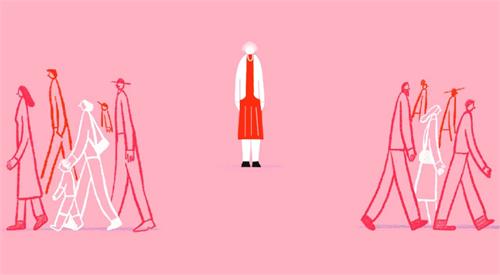
The transformation of friendships after parenthood is, in many ways, inevitable. Older relationships grounded in pure individual resonance may weaken. That loss can be painful. Yet it reflects a rational reallocation of emotional and cognitive resources within a new developmental phase.
Simultaneously, new networks—often more functional at first—begin to form. Through shared logistics, information exchange, and mutual support, these relationships can grow into meaningful bonds of solidarity.
Understanding the underlying mechanisms—identity reordering, emotional capital reinvestment, and narrative compression—does not require pessimism. Rather, it invites clarity. It reveals that much parental loneliness is rooted not in personal failure but in structural gaps in social recognition and support.
Understanding the structure of the problem is an important first step. But what actually alleviates isolation are often small, sustainable shifts in behavior.
These shifts are not about “restoring” your previous social life. Rather, they are about redesigning connection within the constraints of your current reality.
1. Stop Pursuing “Complete Socializing” — Build Low-Burden Connections Instead
Many parents gradually withdraw from friendships not because they don’t value them, but because they assume social interaction must be “complete”:
A full-length meetup
A deep, meaningful conversation
An emotionally rich exchange
In the parenting stage, these standards are often too demanding.
Instead, try lowering the threshold for connection:
A voice message that doesn’t require an immediate reply
A brief 20-minute meetup (for example, a quick coffee during a school drop-off)
Sharing a small moment during fragmented time, rather than a fully formed story
These “lightweight connections” are far more sustainable in daily life.
Relationships are not maintained by intensity alone, but by frequency and continuity.
2. Translate Your Life Instead of Waiting to Be Understood
The distance from non-parent friends is often not due to a lack of care, but a lack of entry points for understanding.
Rather than waiting for others to “naturally empathize,” offer a simple framework:
“My life rhythm is really different right now. I may not be able to meet as freely as before, but I still really value our friendship.”
“If I reply slowly sometimes, it’s not that I’m ignoring you—I’m just stretched thin.”
This act of “translation” reduces the cost of misunderstanding within relationships.
It moves the dynamic from assumption to clarity.
3. Intentionally Add a Bit of “Non-Function” Into Functional Relationships
New social networks often revolve around function:
Parent groups
School-related contacts
Neighborhood support systems
But whether a relationship can grow depends on whether something beyond function emerges.
You can introduce small shifts:
Add one non-parenting topic during school pick-ups
Express a genuine feeling alongside practical exchanges
After helping each other, add: “Honestly, I felt a bit overwhelmed today too.”
These subtle deviations gradually transform relationships from transactional to relational.
4. Preserve a Small Exit for Your Non-Parent Identity
Being fully consumed by the parenting role is a major source of isolation.
Even with extremely limited time, try to preserve a minimal space for yourself:
One fixed personal activity per week (even just 30 minutes)
Ongoing input unrelated to parenting (books, podcasts, writing)
At least one conversation that is not centered on your child
This is not selfish—it is a form of psychological diversification.
When the self is not entirely absorbed by a single role, the capacity to connect with others becomes more stable.
5. Be Patient With the “Phases” of Relationships
The fading of some relationships does not necessarily mean they are gone—it may simply reflect a shift in timing.
Research on adult development shows that relationships often follow a pattern of phase-based intensity:
Some connections are highly active during certain life stages
And quietly stable, but less frequent, during others
There is no need to urgently restore every relationship to its former closeness.
Some relationships only need to be gently maintained.
They may regain importance in a different phase of life.
Parenthood does not simply transform the self. It restructures the social architecture around the self. Recognizing that transformation—rather than denying it—may be the first step toward rebuilding connection in its new form.
FAQs
1. Is it normal to lose friends after having children?
Yes. In most cases, friendships don’t disappear due to conflict, but because of structural life changes.
Shifts in identity, time allocation, and emotional energy naturally lead to a reorganization of social networks.
What often feels like “loss” is actually a transition in how relationships function.
2. How can I reconnect with old friends after becoming a parent?
Start small and lower expectations.
Instead of trying to recreate long, meaningful interactions, begin with:
A simple message (“I’ve been thinking about you lately”)
A short check-in call
Sharing a small, real moment from your current life
Consistency matters more than intensity. Reconnection is usually gradual.
3. What if my non-parent friends don’t understand my life anymore?
This is very common. The gap is often not emotional, but experiential.
Rather than waiting for them to understand, try offering context:
Explain your current constraints
Share specific examples of your daily life
Be open about your limited availability
Understanding often follows clarity.
4. How do I maintain friendships when I feel constantly exhausted?
Focus on low-effort connection, not high-energy interaction.
Send voice notes instead of scheduling calls
Keep interactions short but regular
Accept that some conversations may feel less “deep” than before
Sustainable connection is better than occasional burnout-driven socializing.
5. Can new “parent-based” relationships become real friendships?
Yes, but usually over time.
Many relationships start as functional (school, childcare, logistics), but can deepen if:
You share personal experiences beyond parenting tasks
You allow vulnerability in small ways
You interact outside purely practical contexts
Friendship often grows from repeated proximity + small moments of authenticity.
6. Will my friendships ever go back to the way they were before?
Not exactly—and that’s not necessarily a loss.
Friendships evolve alongside life stages. Some may:
become less frequent but more meaningful
pause and later reconnect
be replaced by new forms of connection
The goal is not to restore the past, but to build relationships that fit your present reality.
References
1. Hochschild, A. R. (2012). The second shift: Working families and the revolution at home (Revised ed.). Penguin Books. (Original work published 1989)
2. Levinson, D. J. (1986). A conception of adult development. American Psychologist, 41(1), 3–13.
3. Murthy, V. H. (2023). Our epidemic of loneliness and isolation: The U.S. Surgeon General’s advisory on the healing effects of social connection and community. U.S. Department of Health and Human Services.
4. Nomaguchi, K., & Milkie, M. A. (2020). Parenthood and well-being: A decade in review. Journal of Marriage and Family, 82(1), 198–223.
5. Umberson, D., & Montez, J. K. (2010). Social relationships and health: A flashpoint for health policy. Journal of Health and Social Behavior, 51(1_suppl), S54–S66.
About the Author
Dr. Eleanor Whitmore, Ph.D. is a developmental sociologist and family systems researcher based in London. She holds a doctorate in Social Psychology from King’s College London and has spent over fifteen years studying identity transitions, parental mental health, and the social restructuring of adulthood. Her work focuses on the intersection of caregiving, emotional labor, and modern social isolation. She has published in peer-reviewed journals on family dynamics and contemporary adulthood.
Editorial Transparency Statement
This article is an independent analytical essay based on established research in developmental psychology, sociology of family systems, and public health. The referenced works are publicly accessible academic publications and governmental advisories.
No commercial sponsorship, affiliate partnerships, or financial incentives influenced the writing of this article. The analysis reflects the author’s interpretation of existing research and contemporary social trends.
Professional & Educational Disclaimer
This article is intended for educational and informational purposes only. It does not constitute medical, psychological, or therapeutic advice. Readers experiencing persistent loneliness, depression, or relational distress are encouraged to seek support from licensed mental health professionals or qualified healthcare providers.
Individual family dynamics vary widely across cultures, socioeconomic conditions, and personal histories. The reflections presented here describe common structural patterns and should not be interpreted as universal experiences.