



Is There Really a “Right Way” to Parent? What Your Daily Choices May Be Teaching Your Child

——Why Discipline, Attention, and Daily Habits Matter More Than Parenting Styles
By Alexandra Mercer | Updated on March 24, 2026 | 🕓10–12 minutes
Key Highlights
1. Are your daily parenting decisions building independence or dependence over time?
2. When your child struggles, do you step in immediately—or allow space for effort first?
3. Are you correcting behavior, or unintentionally shaping your child’s identity?
4. Is your child’s schedule supporting curiosity—or creating pressure and external motivation?
5. Do your family interactions model emotional regulation and conflict resolution?
6. Are you preventing failure, or helping your child learn how to recover from it?
Why Parenting Feels So Confusing in Practice
If you’ve ever tried to seriously research parenting, you’ve probably noticed a frustrating reality: almost every piece of advice seems to contradict another. Some experts emphasize discipline and structure, while others advocate emotional validation and freedom. Some recommend early independence, while others stress close parental involvement.
The issue is not that these perspectives are wrong. Rather, they operate at a level that is often too abstract to guide real-life decisions. In daily parenting, what actually shapes a child is not the label of a parenting style, but the countless small choices made in ordinary moments—whether to intervene or step back, whether to correct immediately or allow mistakes, whether to prioritize efficiency or long-term growth.
These choices rarely feel significant in isolation. Yet over time, they accumulate into patterns, and those patterns gradually shape a child’s habits, emotional responses, and way of thinking about the world. In that sense, parenting is less about making the “right” decision in a single moment and more about understanding the long-term direction created by repeated behaviors.
A Small Decision That Led to a Long-Term Shift
When my daughter was four years old, I made what seemed like a minor adjustment: I stopped feeding her and encouraged her to eat independently. At the time, my expectations were modest. I simply wanted her to learn basic self-care skills such as using utensils properly and cleaning up after meals.
The immediate outcome was far from ideal. Meals became slower, messier, and occasionally frustrating. There were many moments when stepping in would have been easier and more efficient. However, over the following years, I began to notice changes that extended well beyond the dining table. She became more willing to take responsibility for her own tasks, more patient when facing challenges, and less dependent on constant guidance.
What initially appeared to be a simple behavioral choice gradually revealed itself as something deeper: it was shaping her sense of ownership and self-regulation. This experience reinforced an important realization—parenting decisions are rarely about the immediate outcome; they are about the patterns they reinforce over time.
What Real Parents Are Experiencing
This pattern is not unique. In discussions on platforms like Reddit Parenting, many parents describe similar turning points. One parent shared that after years of packing their child’s school bag to save time, they decided to stop. Initially, the child forgot important items and faced consequences at school. Yet within a short period, the child developed a consistent habit of checking independently.
A comparable perspective appears on Mumsnet, where parents frequently discuss the long-term benefits of allowing manageable mistakes early in life. One recurring theme is that small failures in a safe environment often prevent larger difficulties later.
These shared experiences highlight a consistent principle: children learn less from instruction and more from repeated experience. What feels inefficient or uncomfortable in the short term often contributes to resilience and competence in the long term.
The Psychological Mechanism Behind These Changes
From a developmental perspective, these outcomes align with the work of Carol Dweck, whose research on growth mindset emphasizes the importance of process over outcome. When children are repeatedly encouraged to engage with effort, problem-solving, and persistence, they begin to internalize the belief that ability can be developed.
However, this process is rarely driven by explicit teaching alone. Occasional encouragement has limited impact if it is not supported by consistent experience. For example, telling a child that effort matters while frequently stepping in to solve problems creates a contradiction. Over time, the child learns from the behavior, not the message.
This is why everyday decisions carry such weight. They define the environment in which beliefs are formed, often without conscious awareness.
Practical Adjustment: Learning to Pause Before Helping
One of the most effective changes parents can make is surprisingly simple: delaying intervention. When a child encounters a challenge—whether tying shoes, completing homework, or resolving a minor conflict—the instinct to help immediately is strong, especially when time is limited.
However, introducing a brief pause creates space for independent effort. Instead of stepping in, observing the child’s attempt and asking what they have tried so far encourages problem-solving without removing support entirely. This approach does not mean ignoring the child; rather, it shifts the parent’s role from problem-solver to facilitator.
Over time, this small adjustment can significantly strengthen persistence and confidence. Children begin to approach challenges with the expectation that they can attempt solutions on their own before seeking help.

Rethinking Discipline: Separating Behavior from Identity
Another critical shift involves how parents respond to mistakes. It is common, often unintentionally, to use language that links behavior with identity—for example, describing a child as careless or lazy. While such statements may seem harmless, they can gradually shape a child’s self-perception.
A more constructive approach is to focus on the behavior itself rather than the individual. Describing an action as ineffective or inappropriate, while maintaining respect for the child, helps preserve a stable sense of self-worth. This distinction allows children to view mistakes as part of learning rather than as reflections of their character.
Parents on BabyCenter have noted that this shift in language often leads to more open communication and less emotional withdrawal during correction. When children feel that their value is not being questioned, they are more willing to engage in problem-solving and behavioral change.
Allowing “Safe Failure” Instead of Avoiding All Risk
A common source of parental anxiety is the desire to protect children from failure. While this instinct is understandable, consistently preventing mistakes can limit the development of essential skills such as resilience, adaptability, and independent thinking.
A more balanced approach involves allowing what might be called “safe failure.” This means permitting children to experience manageable consequences in low-risk situations—forgetting an item, making a minor mistake, or struggling with a task—while providing guidance afterward.
Discussions on Quora frequently emphasize that children who learn to recover from mistakes tend to be more capable in the long run than those who rarely encounter difficulty. The key is not the failure itself, but the opportunity to reflect, adjust, and try again within a supportive environment.
The Hidden Cost of Over-Scheduling
In an effort to optimize development, many parents fill their children’s schedules with structured activities. While enrichment can be valuable, excessive scheduling often produces unintended consequences, including stress, reduced intrinsic motivation, and a reliance on external validation.
In my own experience, reducing the number of structured activities and allowing more unstructured time led to noticeable changes. My child became more curious, more engaged in self-directed play, and less resistant to challenges. This suggests that autonomy and internal motivation often develop not through increased structure, but through the space to explore independently.
The key is not to eliminate activities, but to evaluate whether they align with the child’s interests and long-term well-being rather than external expectations.
The Influence of Family Atmosphere
Beyond individual decisions, the overall emotional climate of the family plays a fundamental role in child development. Children are highly sensitive to patterns of interaction, including how parents handle stress, communicate, and resolve conflicts.
Even in early childhood, exposure to consistent tension or unresolved conflict can influence emotional regulation. Conversely, environments where disagreements are followed by respectful communication and resolution provide a model for healthy relationships.
In practice, this means that parenting is not limited to direct interaction with the child. It also includes how adults interact with each other. These dynamics form the background against which children interpret the world.
Making Better Decisions Without Seeking Perfection
Given the complexity of parenting, the goal cannot be to make perfect decisions in every situation. Instead, a more practical approach is to evaluate decisions based on their long-term direction. Asking whether a choice supports independence, resilience, or emotional security can provide guidance without requiring certainty.
Equally important is the ability to reflect and adjust. Parenting is inherently dynamic, and strategies that are effective at one stage may need to evolve as a child grows. Recognizing this flexibility reduces pressure and allows for more thoughtful responses to changing needs.
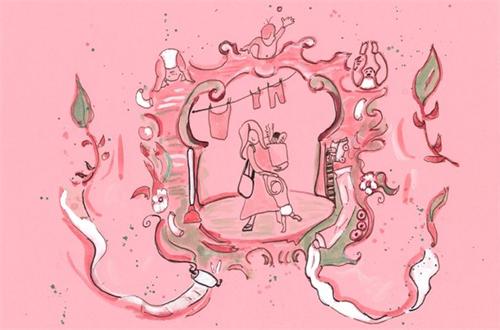
Common Parenting Mistakes — And What to Do Instead
Even when parents understand the importance of long-term development, certain patterns still appear repeatedly in daily life. These are not caused by lack of knowledge, but by real-world pressure—time constraints, emotional fatigue, and the natural desire to avoid conflict.
Instead of revisiting general principles, the following section focuses on specific, high-frequency situations* - where parents often feel “stuck,” along with practical adjustments that can be applied immediately.
1. Morning Chaos: Rushing Leads to Total Takeover
Situation: Getting ready for school or going out
Many parents find themselves stepping in during rushed mornings—helping children get dressed, packing their bags, or even finishing tasks entirely just to stay on schedule. This pattern is rarely intentional; it emerges from time pressure.
However, mornings are one of the most repeated daily scenarios, and they quietly train children in either dependence or participation.
What to do instead:
Shift responsibility the night before, not in the moment.
- Prepare a simple checklist together (bag, clothes, homework)
- Let the child physically check each item
- Accept that the process will be slower at first
This approach removes pressure from the critical moment and turns preparation into a routine rather than a rescue situation.
2. Public Meltdowns: Immediate Control vs. Emotional Coaching
Situation: Child cries, refuses, or loses control in public
In public environments, the priority often becomes ending the situation quickly. Parents may resort to commands, threats, or quick compromises just to restore order.
While effective in the moment, this teaches children that:
- emotions must be suppressed quickly, or
- escalation leads to immediate results
What to do instead:
Lower stimulation first, solve later.
- Move the child to a quieter or less stimulating space
- Use minimal language (“I see you’re upset”)
- Wait until emotional intensity decreases before discussing behavior
The key shift is timing. Emotional regulation cannot be taught at peak intensity; it is learned after* - the child returns to a calmer state.
3. Homework Time: When Help Becomes Substitution
Situation: Child is slow, distracted, or stuck on homework
This is one of the most common friction points. Parents often sit next to the child and gradually move from guidance to direct answers, especially when progress feels inefficient.
Over time, this can create a subtle dependency: the child learns that progress happens with assistance, not through effort.
What to do instead:
Change your role, not your presence.
- Stay nearby, but avoid continuous instruction
- When asked for help, respond with prompts:
- “What part is confusing?”
- “What have you tried already?”
- Set a clear boundary: you guide thinking, not provide answers
This maintains support while preserving cognitive ownership.
4. Screen Time Conflicts: Power Struggles Instead of Structure
Situation: Child resists stopping screen use
Many families experience repeated conflict around screen time. Inconsistent limits or last-minute enforcement often turn this into a negotiation or confrontation.
Children are not just reacting to screens—they are reacting to unclear or shifting boundaries.
What to do instead:
Externalize the rule.
- Set a fixed, predictable structure (e.g., “30 minutes after homework”)
- Use timers or visible cues instead of verbal reminders
- When time ends, refer to the rule—not your authority
For example:
“This is the agreed time,” rather than “I told you to stop.”
This reduces personalization of conflict and makes the boundary feel stable rather than negotiable.
5. Social Conflicts: Stepping In Too Early
Situation: Child struggles with peers (sharing, disagreements, exclusion)
Parents often feel compelled to intervene immediately to resolve conflicts, especially when another child is involved. While this can restore fairness quickly, it can also prevent children from learning how to navigate social dynamics.
What to do instead:
Observe before intervening.
- Give the child a brief window to respond independently
- Step in only if the situation escalates or becomes unsafe
- Afterward, discuss the situation:
- “What happened?”
- “What could you try next time?”
The learning happens in reflection, not in immediate correction.
Why These Small Adjustments Matter
What connects all these situations is not a specific parenting method, but a consistent shift:
- from reacting → to preparing
- from controlling → to structuring
- from solving → to guiding
These adjustments do not eliminate difficulty. In fact, they often introduce short-term friction. But they gradually reduce repeated conflicts and build skills that children carry into new situations.
Conclusion
There is no single “right way” to parent. However, there are consistent patterns in how children develop. Repeated experiences shape beliefs, and beliefs guide behavior over time.
Parenting, therefore, is less about achieving perfection and more about cultivating awareness. By paying attention to the patterns created through daily choices—how we respond, when we intervene, and what we prioritize—we gradually influence how children learn to think, act, and relate to the world.
In the end, the power of parenting does not lie in any single decision, but in the cumulative effect of many small, thoughtful ones.
References
1. Dweck, C. S. (2017). Mindset: Changing the way you think to fulfil your potential. Robinson.
2. Center on the Developing Child at Harvard University. (2021). Building the brain’s “air traffic control” system: How early experiences shape the development of executive function. https://developingchild.harvard.edu/
3. National Scientific Council on the Developing Child. (2020). Connecting the brain to the rest of the body: Early childhood development and lifelong health are deeply intertwined. Harvard University.
4. Ginsburg, K. R. (2018). The importance of play in promoting healthy child development and maintaining strong parent-child bonds. Pediatrics, 142(3), e20182058.
5. Luthar, S. S., & Kumar, N. L. (2018). Youth in high-achieving schools: Challenges to mental health and directions for evidence-based interventions. Current Directions in Psychological Science, 27(4), 245–251.
About the Author
Dr. Alexandra Mercer, Ph.D.
Dr. Mercer is a developmental psychologist and clinical researcher specializing in early childhood development and family systems. She holds a Ph.D. in Human Development and Family Studies and has contributed to research on the long-term effects of parenting behaviors on children’s cognitive and socio-emotional outcomes.
Editorial Transparency Statement
This article is based on a combination of developmental psychology research, observational insights, and real-world parenting experiences. While some examples are drawn from publicly available discussions on parenting platforms, they are used illustratively and do not represent controlled scientific data.
The goal of this content is to provide practical, experience-informed perspectives rather than prescriptive or one-size-fits-all solutions. No external organizations have influenced the content of this article.
Disclaimer
This article is for informational and educational purposes only and does not constitute medical, psychological, or professional advice. Parenting decisions should be made based on individual circumstances, and readers are encouraged to consult qualified professionals (such as pediatricians or licensed child psychologists) when necessary.
The author and publisher are not responsible for any outcomes resulting from the application of the information provided in this article.
Recommended for you: