


Why Many Early Learning Toys Only Benefit Parents
——When Parenting Stress Becomes a Commodity, Kids Often Lose Out
By Charlotte Bennett | Updated on February 26, 2026 | 🕓11–13 minutes
Key Highlights
- Why do children often lose interest in “educational” toys so quickly?
- Do more advanced, feature-rich toys actually lead to better cognitive outcomes?
- Are parents buying toys based on children’s needs—or social pressure and comparison?
- What happens in a child’s brain when playing with simple toys versus electronic ones?
- What defines a “good toy” in terms of long-term developmental value?
- Can everyday household activities replace expensive early learning tools?
- What practical steps can parents take to reduce overconsumption and improve play quality?
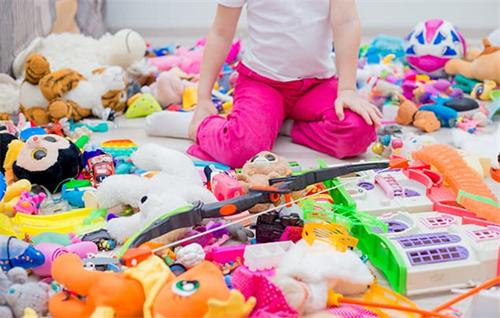
In living rooms across the world, brightly colored early learning toys pile up into small mountains. Buttons flash, music plays, puzzle boxes are opened and tossed aside. A child might play with a toy for a minute before running off to turn a cardboard box into a castle; meanwhile, parents stand by, ticking boxes in the instruction manual to record “today’s progress.” On the surface, this seems like shared parenting time; in reality, the ones truly benefiting are often the parents, not the children.
Scenes like this are far from uncommon. The early learning toy market grows over 20% each year, yet children’s attention spans for these toys are often no more than ten minutes. So, are these carefully designed toys really for the child, or are they meant to alleviate parental anxiety?
Standardization of Early Learning Toys and Quantifying Anxiety
Over the past decade, early learning toys have evolved from simple entertainment tools into highly standardized educational products. Packaging now boasts a myriad of developmental claims: cognitive skills, hand-eye coordination, logical thinking, social skills… each seeming like a promise to the parent. Yet when children’s actual interactions are observed, the supposed “scientific learning” often triggers minimal skill development.
The psychological concept of “quantified self” has been cleverly imported into parenting. Toy designers frequently focus on developing single skills: number puzzles train logic, flashing musical blocks stimulate sensory responses, multi-layered memory cards target recall. But children’s natural inclination is exploration and autonomous creation—not following a manual.
Research in cognitive psychology shows that the attention of children aged 0-6 is fluid and divergent. As early as the 1950s, Swiss psychologist Jean Piaget emphasized that young children construct knowledge through holistic interaction with their environment rather than through modular skill drills. For example, a set of electronic building blocks marketed as “developing hand-eye coordination” might only prompt a child to press buttons and listen to music, without truly understanding construction logic; a flashing puzzle claiming to “enhance attention” often draws the child’s focus to lights and sounds, not the puzzle itself. The goals of the toy and the child’s natural interests are frequently misaligned—children’s exploration is constrained by the product’s logic, while the toy’s impact primarily satisfies parents’ desire to see “learning in action.”

Toys as Social Currency
Toys are not only educational tools—they have become a form of social currency for parents. British sociologist Jane Evans, in her book Parenting Under Pressure, observed that middle-class families often use educational consumption to construct social identity, turning toys from playmates into ornamental elements of a “parenting résumé.”
Early learning toys are updated at lightning speed, with new releases each quarter. Brands manipulate colors, materials, and interactive features to stimulate parental purchasing, often neglecting the psychological process by which children form meaningful relationships with objects. A survey by Beijing Normal University found that 72% of parents purchased high-end early learning toys primarily because “other children are using them,” rather than out of genuine interest from their own child.
This phenomenon is global: literacy cards in Gangnam, Seoul; Arabic programming robots in Dubai; logic boxes in Shanghai—parents across cultures are swayed by similar marketing messages: “Invest now, reap future rewards.” Meanwhile, Finland has one of the lowest levels of toy consumption, yet Finnish students consistently lead in PISA tests on creative problem-solving. This contrast suggests that enthusiasm for educational consumption often does not correlate with actual benefits for children.
Misaligned Design Logic and Child Development Principles
Child development experts note that many early learning toys are misaligned with the natural growth of young children. For 3-4-year-olds, small muscles in the hands are not fully developed; spontaneous drawing is more valuable than structured writing. Toys with “error correction” functions often interrupt the child’s autonomous exploration of shapes and structures.
Creativity is also fragmented. Over 60% of STEM toys on the market focus on single-skill training: this week, gears and simple mechanics; next week, basic circuits. Neuroscience research, however, shows that neural connections in young children’s brains flourish most during cross-domain exploration. When a child uses a block as a phone or turns a blanket into a castle, they are experiencing critical cognitive leaps—symbolic thinking in action.
Overstimulation presents another concern. At the American Academy of Pediatrics annual meeting, neuroscientists presented brain scans showing that when children play with traditional blocks, the prefrontal cortex exhibits active and orderly blood flow. By contrast, while playing with audiovisual electronic toys, sensory-processing areas spike briefly, but prefrontal activity—responsible for attention and deep thinking—can be suppressed.
Family Interaction is Key
The true educational value of a toy lies not in the toy itself, but in its role as a medium for parent-child interaction. A simple wooden block set can encourage parents and children to build “castles” together or act out role-play scenarios, during which children learn cooperation, language expression, and logical planning. In contrast, electronic learning toys or graded flashcards, even when advertised as “skill accelerators,” rarely stimulate meaningful interaction independently.
In other words, the potential of a toy requires active engagement from the family. Without parental participation, even the most scientifically designed early learning tool is reduced to a blinking plastic or electronic object. Conversely, the process of shared play and autonomous exploration can be achieved with the simplest, most durable toys. Consumption does not equal growth; complex features do not automatically translate into development.
Redefining the “Good Toy”
To evaluate a toy’s value, consider three simple questions:
1. Does it stand the test of time? A longitudinal study in the Netherlands found that the toys most frequently played with by the same cohort at ages 2 and 5 were simple wooden blocks.
2. Does it leave space for imagination? The core principle of Montessori teaching is “minimal design.” A low table and a container of sand can become a coastline, a bakery, or dinosaur footprints.
3. Does it connect or isolate? A good toy serves as a medium for parent-child conversation, rather than replacing human interaction with an “electronic babysitter.”
The “slow toy” movement is resurging. At the Berlin International Toy Fair, the “battery-free” section expands yearly. The Japan Toy Association introduced a “toy lifecycle” certification, where the degradation time of high-quality washi paper materials may be shorter than the usage span of plastic alphabet cards. The underlying philosophy returns to basics: toys are an extension of childhood, not a node in a consumption cycle.
Undervalued “non-toys” are also important. Educational anthropologists studying cross-cultural settings found that Indian village children invent board games using mango seeds and sticks that are as complex as coding toys; Yunnan Yi children naturally learn color gradients and fine sorting through helping family members manage threads. Everyday life is already rich with learning opportunities.
Childhood on the Conveyor Belt of Consumerism
Toy innovation often outpaces children’s developmental pace. A well-known brand may launch twelve “skill development series” annually, yet critical developmental windows unfold over years, not quarters. Commercial imperatives demand “new releases every season,” while developmental principles require “repeated experience”—the two are often at odds.
Beyond direct purchases, there are hidden costs: anxiety over storage, decision fatigue from endless comparisons, guilt from not fully utilizing toys. These drain the psychological energy that could have been invested in parent-child interaction.
True early education does not reside on the first page of a toy manual; it exists in the unstructured, seemingly “useless” folds of time. Amid constant marketing of “must-have” parenting products, we must protect children’s innate, invaluable abilities: the freedom to daydream, the courage to fail, and the right to explore the world at their own pace.
From Awareness to Action: What Can Parents Actually Do Differently?
If early learning toys often serve adult expectations more than children’s development, the question becomes unavoidable: what should parents do instead—especially in a world where these toys are everywhere?
The answer is not to reject all toys, but to change how we use them, choose them, and relate to them.
1. Replace “Learning Goals” with “Observation Moments”
Many parents unconsciously approach toys with a checklist mindset:
Did my child learn something? Did this toy improve a skill?
But several parents who shifted their approach report a surprising change—not in the child, but in themselves.
Case: A mother in Amsterdam (child age 3)
She removed most “instruction-based toys” and kept only a small set of open-ended materials: blocks, fabric, and drawing tools. Instead of guiding play, she began simply observing.
“At first, I felt anxious—like I wasn’t doing enough. But then I noticed my son using a wooden block as a ‘phone,’ then a ‘train,’ then part of a ‘zoo.’ None of that was in the manual. That’s when I realized: learning was already happening.”
What to try:
Spend 10–15 minutes a day watching without interrupting
Resist explaining or correcting
Mentally note: What is my child trying to do, not what the toy is designed to do?
2. Shift from “Buying” to “Borrowing and Rotating”
Parents often buy new toys to solve a feeling: “Maybe my child needs something better.”
But some families reduce this pressure by changing the system itself.
Case: A parent group in Berlin
Five families created a small “toy rotation circle.” Each month, they exchange a curated set of toys.
“Newness still exists—but without constant buying. And interestingly, children play longer with ‘borrowed’ toys because they know they’re temporary.”
What to try:
Start a toy swap with 2–3 families
Rotate every 3–4 weeks
Store, don’t discard—reintroduce later
3. Reintroduce “Non-Toy” Play Into Daily Life
Many parents underestimate how much learning already exists in everyday environments.
Case: A family in Kyoto (child age 5)
Instead of buying fine-motor toys, the child helps with simple household tasks: sorting beans, folding cloth, arranging utensils.
“We didn’t plan it as ‘learning.’ But over time, we saw improvements in focus, coordination, and even patience.”
What to try:
Cooking: washing vegetables, stirring, sorting ingredients
Household: matching socks, organizing items by color/size
Outdoors: collecting leaves, stones, or sticks and categorizing them
4. Audit Your Own Anxiety, Not Your Child’s Performance
Perhaps the most important shift is internal.
Many parents in interviews admit that toy purchases are often driven by subtle fears:
“What if my child falls behind?”
“What if I’m not doing enough?”
Case: A mother in San Francisco (two children)
She began tracking why she bought toys, not what she bought.
“I realized most purchases happened after I saw something online or heard other parents talk. It wasn’t about my child—it was about my anxiety.”
What to try:
Before buying a toy, pause and ask:
Is my child asking for this—or am I reacting to something external?
Will this replace interaction, or support it?
Will this still be used in a month?
What Changes First: The Child or the Parent?
Interestingly, in most real-life cases, the parent changes first.
Less urgency.
Less comparison.
Less need to “optimize” every moment.
And as that pressure fades, children often begin to:
Play longer
Use objects more creatively
Seek interaction more naturally
Which leads to a quiet but powerful realization:
Children were never lacking the ability to learn.
They were often lacking the space to do it in their own way.
Conclusion
When toys become commodities of consumerism, children are not necessarily the beneficiaries. Parental presence, children’s autonomous exploration, and the simplest toys are the real starting points for early learning. The seemingly “useless” moments are often the most precious gifts for a child’s development.
FAQs
1. Should I stop buying early learning toys altogether?
Not necessarily. The issue is not the existence of these toys, but how they are selected and used. A well-chosen toy that encourages open-ended play and interaction can still be valuable. The goal is to shift from quantity and features to quality and flexibility.
2. How many toys are “too many” for a child?
When children are overwhelmed by choices, they tend to switch quickly rather than explore deeply.
A practical benchmark:
If your child frequently moves from one toy to another within minutes, it may be a sign of overstimulation rather than boredom.
3. Are electronic learning toys harmful?
Not inherently—but they can be overstimulating and limiting if overused. Many electronic toys:
Provide instant feedback (lights, sounds), reducing the need for imagination
Direct the play experience instead of allowing the child to lead
Replace interaction rather than encouraging it
Occasional use is fine, but they should not dominate a child’s play environment.
4. What are the best types of toys for long-term development?
Toys with open-ended possibilities tend to offer the most value over time. Examples include:
Wooden blocks
Art materials (paper, crayons, clay)
Fabric, loose parts, and everyday objects
These allow children to create their own rules, which supports creativity, problem-solving, and symbolic thinking.
5. What if I don’t have much time to play with my child?
Quality matters more than quantity. Even 10–15 minutes of focused, uninterrupted interaction can be highly beneficial.
Simple ways to integrate interaction:
Talk during daily routines (meals, dressing, walking)
Join your child’s play briefly instead of directing it
Ask open-ended questions rather than giving instructions
6. How do I know if a toy is actually “working”?
Does your child return to the toy repeatedly?
Do they use it in different ways over time?
Does it encourage interaction or storytelling?
If the answer is yes, the toy is likely supporting meaningful development.
References
1. Evans, J. (2020). Parenting under pressure: How educational consumption shapes identity. London: Routledge.
2. American Academy of Pediatrics. (2022). Brain development and play: Neuroscientific insights. Pediatrics Journal, 150(4), e2022058.
3. Beijing Normal University. (2019). Survey on high-end early learning toy consumption patterns. Beijing: BNU Press.
4. OECD. (2021). PISA 2021 Results: Creative problem-solving and student outcomes. Paris: OECD Publishing.
About the Author
Charlotte Bennett
Charlotte Bennett is an early childhood education researcher and writer with a focus on child development, parenting behavior, and the impact of consumer culture on learning. She has consulted for early learning centers and contributed to educational publications on developmental psychology and early learning practices.
Editorial Transparency Statement
This article has been independently researched and written. No brands mentioned in the article received sponsorship, and no products were promoted. All claims are supported by peer-reviewed research, longitudinal studies, or reputable institutional data.
Professional & Educational Disclaimer
The content of this article is intended for informational and educational purposes only. It is not a substitute for professional advice from a licensed educator, child psychologist, or pediatrician. Readers should consult qualified professionals for specific concerns regarding child development or parenting.