



Companionship Is Not Surveillance: Becoming a Witness to Your Child’s Life Instead of a Manager

——Understanding the Inner Forces That Drive Children’s Growth
By Ethan Caldwell | Updated on March 11, 2026 | 🕓10–12 minutes
Key Highlights
- What is the difference between companionship and management in parenting?
- How does “being witnessed” differ from being evaluated or corrected?
- How can parents recognize when their help is driven by anxiety rather than necessity?
- What practical strategies help shift from giving answers to encouraging thinking?
- How should parenting approaches adapt to different child temperaments?
- How can parents decide when to step in versus when to step back?
- Why is inefficiency an essential part of a child’s learning process?
In a friend’s home in Northern Europe, I once witnessed a scene that stayed with me.
On a Sunday afternoon, a six-year-old child sat on the living room rug building a bridge with blocks. The bridge kept collapsing. He frowned, paused, and tried again. His mother sat nearby on the sofa. She offered no instructions and didn’t say, “You should build it this way.” She glanced over occasionally and continued reading her book.
Twenty minutes later, the child suddenly stood up and said, “I just discovered a new way!”
The mother smiled and nodded. She didn’t evaluate or offer exaggerated praise. Later she told me, “I used to jump in and teach him. Now I’ve learned to watch first. Many times, children don’t actually need us.”
Those twenty minutes contained no lessons, no tools, and no “educational tasks.”
Yet they may have been a true moment of independent growth.
Why Much of What We Call “Companionship” Is Actually Supervision
After observing many families over time, I’ve noticed a common pattern: many parents believe they are accompanying their children, but their behavior is closer to management.
Examples include constantly correcting how a child plays or works, providing “more efficient” solutions in advance, frequent reminders and checks, continual evaluation, and turning activities into task lists.
These behaviors usually come from good intentions: parents want their children to avoid detours and improve faster. However, research and practical experience show that excessive intervention weakens children’s sense of autonomy and willingness to try.
Self-Determination Theory in psychology suggests that children’s development depends on three key elements:
- Autonomy: I can decide for myself.
- Competence: I am capable.
- Relatedness: Someone sees me.
When children feel supervised, they focus on avoiding mistakes.
When they feel witnessed, they become more willing to explore.
Over time, I’ve noticed a simple pattern:
children who are constantly reminded tend to stall without reminders;
children who are allowed to try independently develop stronger self-correction skills.
Excessive guidance often leads to a shrinking of ability.
Frequent instruction conditions children to wait for external directions rather than generate their own solutions. Their brains lose opportunities to practice the crucial cognitive function of problem-solving. Every premature correction removes a chance for natural learning from mistakes. True self-correction comes not from avoiding errors, but from experiencing outcomes, analyzing them, and adjusting.
The Core Insights of Self-Determination Theory
Self-Determination Theory identifies three psychological foundations of healthy development: autonomy, competence, and relatedness. Together, they form the source of intrinsic motivation.
The Paradox of Autonomy:
When parents step in as supervisors, they may believe they are guiding, but they are often removing the autonomy children need most. Children begin to attribute their behavior to external pressure (“because my mom told me to”) rather than internal choice. Over time, this external attribution weakens the “muscle memory” of independent decision-making.
The Power of Being Witnessed:
Being seen—rather than judged—is one of the deepest forms of relatedness. When children feel that their efforts, exploration, and even failures are calmly acknowledged, they develop a fundamental sense of security: “I exist, and my existence itself has value.” This security nurtures genuine courage and inner drive.

Adapting Companionship to Different Temperaments
Personality models are not fixed labels but lenses for understanding behavioral tendencies. Each child is a unique blend of traits that shift across developmental stages.
1. Highly Independent Explorers (Children Who Love to Figure Things Out Alone)
These children often immerse themselves in their own world and follow their own rhythm. Their core need is uninterrupted flow. Their exploration tends to be deep rather than broad.
Common parental habits that disrupt them include constant suggestions, correcting play styles, or offering “better” solutions.
Witness-based companionship:
- Shift from directive language to descriptive language:
“I see you put the red block on top,” instead of “The red one would be better here.”
- Observe before speaking (the “five-minute rule”). This rule is not just behavioral—it trains parents to recognize real teaching moments versus anxiety-driven interruptions.
- When creative attempts are calmly witnessed rather than judged, children develop strong internal standards: “I do this because it makes sense to me.”
2. High Reassurance Seekers (Children Who Constantly Ask, “Is This Right?”)
These children frequently look for confirmation and wait for instructions. Often their “Is this right?” questions reflect a need for connection rather than information. Constantly giving answers can deepen dependency and weaken decision-making.
Key strategy shifts:
- Turn confirmation questions into thinking invitations:
“You seem unsure about these two choices. What are you considering for each?”
- Introduce a “30-second thinking rule.” This short pause creates cognitive space for children to shift from seeking answers to generating them.
- Gradual autonomy: allow one fully independent decision each day. Over time, children begin proposing their own solutions, demonstrating the brain’s plasticity through repeated practice.
3. Highly Sensitive and Cautious Children (Expanding the Comfort Zone)
These children often fear failure, react strongly to emotions, and hesitate to try new things. Emotional safety must come before behavioral change.
Subtle balances in witness-based support:
- Pre-authorize failure: “Today we’re just trying it out.” Describe the process rather than evaluate results. Framing something as “just trying” reduces emotional threat.
- Record attempts rather than successes:
“I noticed you tried three different approaches.”
This shifts value from outcomes to effort.
- Over time, children begin to redefine failure as information gathering rather than self-negation. Emotional recovery becomes faster and attempts increase.
4. High-Energy Extroverts (Guiding the Flow of Energy)
These children are active, impulsive, and interaction-oriented. Their energy is not a problem but a resource that needs structure rather than suppression.
Instead of constant reminders or prohibitions, parents can create:
A “Boundaries + Freedom Zones” Model
- Clear physical or time boundaries (“You can play freely in this area,” “You can choose your activity for the next 30 minutes”). Complete freedom without structure can actually increase anxiety.
- Participatory observation: being present without taking control. The focus remains on the child’s experience, not adult expectations.
- Within defined boundaries, children learn to regulate their own energy—a skill more sustainable than external reminders.
When to Step In and When to Step Back
A three-step decision framework helps parents move from automatic reaction to thoughtful response:
Step 1: Safety Screening — The Basic Protective Role
Safety is non-negotiable, but intervention style matters:
- Physical safety: intervene immediately but calmly.
- Emotional safety: distinguish genuine threats from parental anxiety projections.
Step 2: Values Guidance — Long-Term Character Formation
Values are not taught through a single lecture but through consistent boundaries and modeling. Issues like honesty and respect require clear, stable responses that help children build a moral compass.
Step 3: Letting Go of Efficiency — The Necessary Cost of Growth
This is often the hardest step because inefficiency triggers parental control anxiety. Yet it is precisely here—organizing schoolbags, choosing task sequences—that children learn:
- prioritization
- consequence awareness
- self-adjustment
The courage not to intervene lies in trusting that children can learn from imperfect outcomes. That trust itself becomes fertile ground for competence.
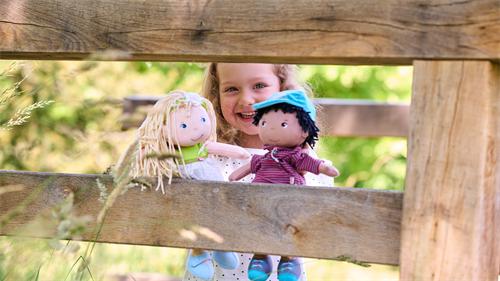
The Posture of a Witness: A Profound Way of Being Present
The collapsing block tower captures the essence of witness-based companionship.
The mother’s restraint created a sacred pause—a space without instruction, comfort, or evaluation. Within that space, the child experienced a full cognitive cycle: planning, acting, encountering setbacks, pausing, adjusting, and trying again.
Twenty minutes of quiet presence conveyed deep confidence:
“I believe you can face this frustration and find your own solution.”
When the child finally said, “I discovered a new way,” he was not just reporting a technical success. He was declaring a new self-understanding:
“I am someone who can solve problems.”
Witnessing does not mean absence. It is a form of deep presence—eyes observing, heart attuned, hands restrained. This restraint is not indifference; it is respect for the child’s right to experience the full learning process as an independent person.
To become a witness is to distinguish between two roles:
- Manager of growth: focused on results, efficiency, correctness
- Witness of growth: focused on process, effort, discovery
Choosing the latter does not mean abandoning responsibility. It means embracing a deeper commitment: accompanying a life as it becomes itself, at its own pace and in its own way.
Often, the most powerful lessons occur in the quietest moments of witnessing—when children encounter not our answers, but the boundaries and possibilities of their own abilities.
FAQs
1. What if my child keeps making the same mistake repeatedly?
Repetition is often part of how children learn. Instead of correcting immediately, you can ask reflective questions like:
“What do you think happened last time?”
This helps the child connect actions with outcomes rather than relying on external correction.
2. How do I know if I’m helping too much?
A simple indicator:
If your child frequently pauses and looks to you before acting, or asks for confirmation on small decisions, you may be over-involved. Healthy independence includes trying without checking first.
3. Can this approach work in academic settings where performance matters?
Yes—but with balance. You can maintain clear expectations (deadlines, responsibility) while still allowing children to struggle through the process. Long-term competence comes from learning how to think, not just getting correct answers.
4. What should I do if my child gets frustrated or emotional during independent attempts?
Acknowledge the feeling without taking over:
“This looks frustrating.”
Then pause. Emotional validation often helps children regulate themselves and continue.
5. Is this approach suitable for younger children (e.g., under 5)?
Yes, but with shorter time frames and more visible presence. Young children still benefit from small moments of independent exploration, as long as safety and emotional support are maintained.
6. How long should I wait before stepping in?
There’s no fixed rule, but the “five-minute observation” or “pause before helping” principle is a useful guideline. Often, children resolve more than we expect if given a little time.
7. What if I feel anxious watching my child struggle?
That feeling is common. Often, the urge to intervene comes from parental discomfort, not the child’s actual need. Learning to tolerate that discomfort is part of shifting from manager to witness.
8. Will children feel unsupported if I don’t give feedback or praise?
Not if they feel seen. Subtle acknowledgment—like noticing effort or persistence—is often more powerful than praise.
For example: “You kept trying different ways.”
References
1. Deci, E. L., & Ryan, R. M. (2020). Self-determination theory: Basic psychological needs in motivation, development, and wellness. Guilford Press.
2. Grolnick, W. S., & Pomerantz, E. M. (2022). Issues and challenges in studying parental control: Toward a new conceptualization. Child Development Perspectives, 16(1), 34–39.
3. Joussemet, M., Mageau, G. A., & Koestner, R. (2021). Promoting optimal parenting and children’s mental health through autonomy support. Current Opinion in Psychology, 38, 44–49.
4. Luthar, S. S., & Kumar, N. L. (2023). The pressures of modern parenting: The cost of over-structuring childhood. Development and Psychopathology, 35(2), 455–470.
5. Soenens, B., Vansteenkiste, M., & Van Petegem, S. (2022). Letting children grow: Autonomy-supportive parenting in contemporary families. Annual Review of Developmental Psychology, 4, 367–391.
About the Author
Ethan Caldwell, PhD
Child Development Researcher & Family Culture Writer
Ethan Caldwell holds a PhD in Developmental Psychology from University College London. His work focuses on intrinsic motivation, autonomy-supportive parenting, and the cultural shaping of modern childhood. He has contributed to research and editorial work in European child development publications and writes extensively about over-structured parenting, consumer culture in childhood, and sustainable family environments.
Editorial Transparency Statement
This article is based on established developmental psychology research, cross-cultural family observations, and long-form educational writing.
All family scenarios presented are composite narratives designed to illustrate common parenting patterns rather than depict specific individuals or households.
No brand sponsorships, affiliate partnerships, or commercial incentives influenced the creation of this article.
Professional & Educational Disclaimer
This article is intended for educational and informational purposes only. It does not constitute medical, psychological, or individualized parenting advice.
If a child is experiencing significant developmental concerns, emotional distress, or family challenges, readers are encouraged to consult licensed healthcare providers, child psychologists, or qualified educational professionals.
Recommended for you: